


Eternal founder Deepinder Goyal says his ₹85,000 Temple wearable is designed for global consumers, not specifically for India. His latest clarification comes amid growing questions from doctors about its Brain Flow technology, scientific validation and actual health applications.
- Why Deepinder Goyal Says Temple Is Not Made for India
- What Is Temple And What Does It Actually Track?
- Why Doctors Are Questioning Temple’s Brain Flow Claims
- Goyal Promises More Transparency Around Brain Flow
- Temple’s Price and What Buyers Should Consider
- What This Means For The Future Of Health Wearables
- Conclusion
Deepinder Goyal has responded to the growing criticism surrounding Temple, his new AI-powered wearable, saying the device was never designed specifically for the Indian market. The Eternal founder expects India to contribute less than 1% of the product’s total sales, as the company looks to position Temple as a global offering.
Hello everyone. Happy Diwali!
Thank you for your criticism, your support and your time over the last two days. Gives me much needed clarity on what we need to explain better:
1. Temple is not made for India. It’s made for the world. Please check pricing. We don’t expect…
— Deepinder Goyal (@deepigoyal) November 8, 2026In a series of posts on X around Diwali, Goyal addressed questions about the device’s pricing, scientific claims and intended use. He also pushed back against the idea that people should support Temple simply because it comes from an Indian startup. “We don’t need/want nationalist support,” was the message behind his response. Goyal said the company wants to compete internationally and attract customers who genuinely believe in the product.



However, the discussion around Temple goes beyond its price or target audience. The wearable has attracted considerable attention because of its claims around brain blood flow and a new physiological metric called Entropy. Medical professionals have questioned whether the technology can reliably measure what the company says it can.
Why Deepinder Goyal Says Temple Is Not Made for India
Temple is positioned as a premium wearable rather than a conventional fitness band or smartwatch. Its reported launch price in India is ₹85,000, placing it well above most consumer health-tracking devices.
Goyal said the company does not expect India to account for more than 1% of Temple’s sales. According to him, the product is being developed for a global audience, and its pricing reflects the research and development involved.
He also asked people not to purchase the device merely to support an Indian company. Instead, he wants customers to evaluate the product on its technology and potential usefulness.
The clarification comes after the price became a major point of discussion on social media. Some users questioned whether an expensive wearable with features that are still undergoing validation could justify its asking price.
What Is Temple And What Does It Actually Track?
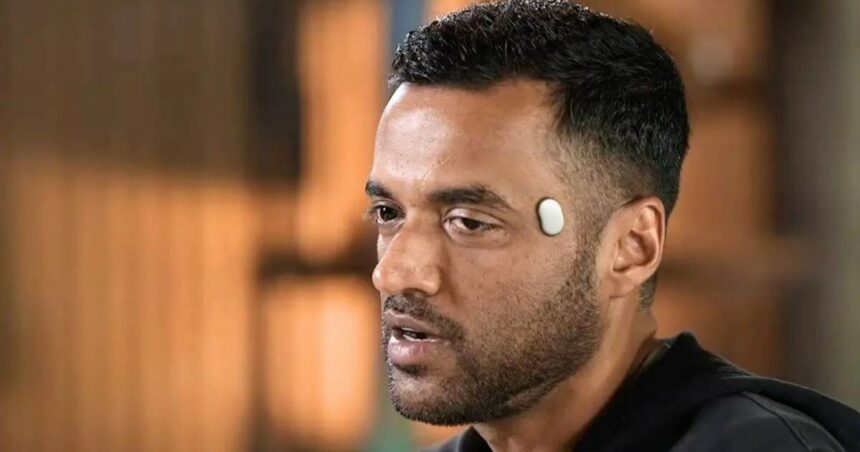
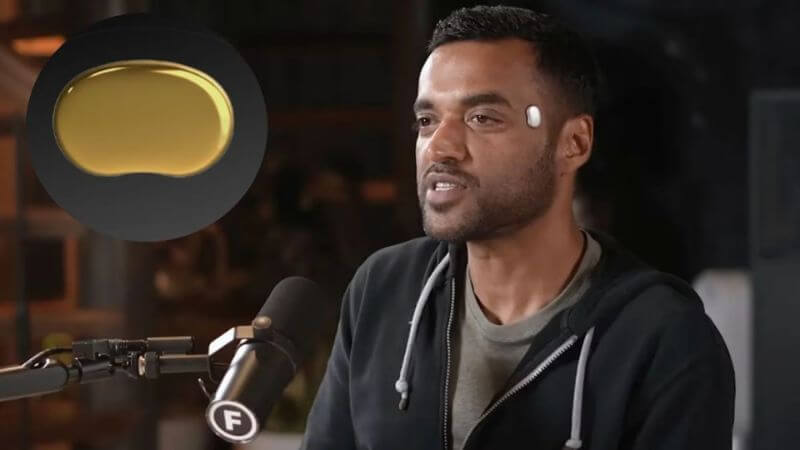
Temple is a compact, screenless wearable that attaches to the side of the head near the temple. Unlike conventional fitness trackers that sit on the wrist, it uses optical sensing technology to collect physiological signals from the temple region.
The company has highlighted two key metrics: Brain Flow and Entropy. Brain Flow is Temple’s proprietary metric, intended to track changes in signals associated with blood flow to the brain. The idea is to observe how these signals respond to changes in posture, activity and other physiological conditions.
Entropy is another metric that Goyal says is central to the product. Temple’s official website describes it as a measure of how hard the body works to shed heat. It considers several systems and factors, including thermal, immune, digestive, cognitive, emotional and recovery-related activity.
Goyal has indicated that the company’s larger focus is Entropy, not Brain Flow. He said much of the communication sent to people on the waitlist has centred on Entropy, although detailed research and explanations are still expected.
These are the company’s proposed measurements and interpretations. Their usefulness and accuracy need to be assessed through appropriate scientific validation.
Why Doctors Are Questioning Temple’s Brain Flow Claims
The biggest concern surrounding Temple is whether a sensor placed on the side of the head can reliably measure blood flow inside the brain. The brain receives blood through a complex network of arteries, including the internal carotid and vertebral arteries. The temple region also contains superficial blood vessels that supply the scalp and surrounding tissues.
Medical experts have questioned whether readings collected from this external location can accurately represent circulation inside the brain. A signal detected near the temple does not automatically provide a complete picture of blood flow across different regions of the brain.
Doctors have also pointed out that brain circulation changes according to several factors, including posture, physical activity and the body’s requirements. Establishing a reliable relationship between a wearable’s readings and actual cerebral blood flow requires carefully designed studies.
Goyal’s response has been that Temple is a fitness and AI device, not a medical product. He has clarified that it has not been proven to diagnose or prevent any disease and should not replace consultations with doctors. That distinction is important. A wellness wearable can offer information about physiological patterns, but that does not automatically make its readings suitable for diagnosing neurological conditions or predicting disease.
Goyal Promises More Transparency Around Brain Flow
Goyal has acknowledged that people may prefer to wait for stronger scientific evidence before purchasing Temple. He has also said that customers are not being forced to believe the company’s claims.
The founder promised to publish a detailed explanation of how Temple calculates Brain Flow, where the metric can be useful and, importantly, what its limitations are. He said this information would help people understand the technology rather than relying on short social media discussions.
As of November 9, the promised detailed explanation has not been independently confirmed in the sources reviewed for this article. The availability of that explanation, along with the underlying research, will be important in assessing the company’s claims.
Temple’s official website has a Science & Research section, while a research preprint examining the wearable’s Brain Flow output against transcranial Doppler measurements is also available. A preprint is research shared before formal peer review. It should not be treated as equivalent to independent clinical validation.
Temple’s Price and What Buyers Should Consider
Temple’s reported price for its first batch is ₹85,000. The pre-orders opened on November 1, 2026, and the device is being positioned as a premium product.
However, the price is only one part of the buying decision. Customers should also understand which measurements have been validated, what the device can reliably tell them and which claims remain under research.
| Detail | Information |
|---|---|
| Product | Temple wearable |
| Founder | Deepinder Goyal |
| Reported price | ₹85,000 |
| Design | Compact, screenless wearable |
| Wearing position | Side of the head, near the temple |
| Key metrics | Brain Flow and Entropy |
| Sensor approach | Optical sensing |
| Intended category | Fitness and AI wellness device |
| Medical status | Not proven to diagnose or prevent disease |
| Pre-orders | Opened November 1, 2026 |
The reported price and product details are based on information published around the first-batch launch. Buyers should check Temple’s official website for the latest ordering terms.
What This Means For The Future Of Health Wearables
Temple highlights an interesting direction for consumer technology. Most fitness wearables focus on familiar measurements such as heart rate, sleep, activity and recovery. Devices that attempt to track more complex physiological signals could eventually give users additional ways to understand their bodies.
But innovation in health technology also comes with a higher responsibility to explain what a device measures and what its readings actually mean. For Temple, the next important step is not simply attracting global buyers. It is demonstrating that its measurements are reliable, repeatable and useful. Independent studies and transparent research will matter more than social media debates or comparisons with existing wearables.
Conclusion
Deepinder Goyal’s latest clarification makes Temple’s intended market clear: it is being built for global consumers, with India expected to contribute only a small share of sales. But the bigger question surrounding the wearable remains its science.
The company has positioned Temple as a fitness and AI product rather than a medical device. That makes clear communication about its capabilities and limitations especially important. Until stronger independent evidence becomes available, consumers should treat its Brain Flow and Entropy metrics as emerging technology rather than established measures of brain health or longevity.
Follow Us: Facebook | X | Instagram | YouTube | Pinterest