



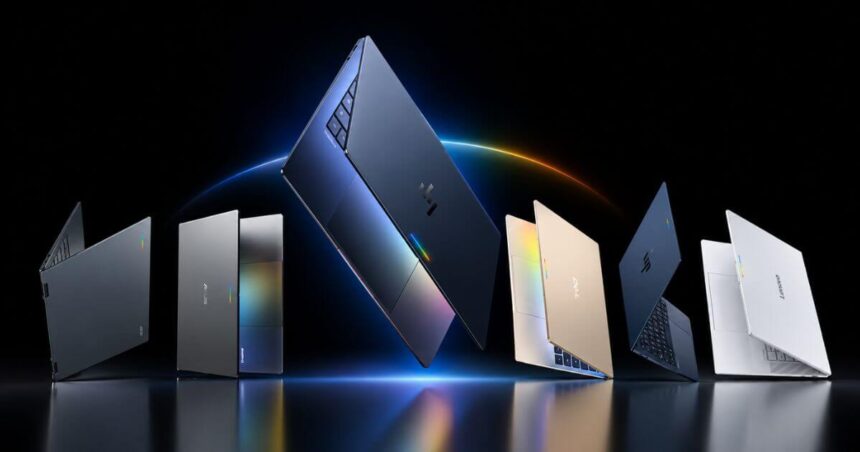
Google is taking another approach to the laptop market with Googlebook, a new class of laptops designed around Gemini Intelligence and deeper Android integration. The company says Googlebook combines Android’s technology stack with the desktop foundations of ChromeOS.
The new laptops are being developed with hardware partners including Acer, Asus, Dell, HP and Lenovo. They come with premium materials, high-resolution displays, dedicated NPUs and features designed to make switching between an Android phone and laptop easier. Google has also built several Gemini-powered tools directly into the experience.
Googlebook Brings Android And ChromeOS Together
Googlebook is designed to make an Android phone and laptop work more closely together. During setup, users can transfer settings, saved passwords, Wi-Fi networks and messages from their Android phone. Google says the process uses end-to-end encryption.



The Continue On feature lets users move tasks from their phone to the laptop. For example, a project started in BandLab on an Android smartphone can be continued from the Googlebook taskbar.
The Files app can also access files and photos stored on the connected smartphone. Meanwhile, Cast My Apps allows users to stream and interact with Android smartphone apps inside a desktop window.
These features make the Android phone a more integrated part of the Googlebook experience rather than simply another connected device.
Gemini Intelligence Is At The Core
Googlebook has been designed around Gemini Intelligence. One of its headline features is Magic Pointer. Users can move the cursor to bring Gemini directly to the content displayed on the screen.
For example, Gemini can help organise a calendar or translate selected text. Google says Magic Pointer can also understand images and context and help with tasks such as analysing suspicious emails or combining selected images.
Another feature is Rambler. It sits next to the Quick Insert key and turns spoken thoughts into formatted text. It can organise notes, action items, headers and checklists. It can also handle conversations involving multiple languages.
Create My Widget takes Google’s generative AI approach further. Users can describe the type of widget they want in natural language. Gemini can then create a custom widget that displays relevant information throughout the day.
Googlebook Specifications And Hardware
Googlebook laptops are positioned as premium devices. Depending on the model, they are available with aluminium, magnesium alloy and carbon-fibre construction. The laptops can feature touchscreens with resolutions of up to 2.8K, including OLED panels. They also come with haptic glass trackpads and backlit keyboards.
Under the hood, Googlebook devices use high-end Intel and Qualcomm processors. These are paired with dedicated NPUs capable of delivering more than 45 TOPS of AI performance.
Google’s official specifications confirm the 16GB RAM baseline, up to 32GB RAM, Intel Core Ultra Series 3 and Snapdragon X Elite options, 45+ TOPS NPUs, up to 2.8K OLED displays and up to 14 hours of video playback Google’s latest official page also mentions up to 16 hours of web browsing, and the Googlebook package includes 12 months of Google AI Pro with 5TB storage for eligible new users.
The company is also bringing back the Glowbar. It is placed on the outside of the laptop and lights up when the device starts. It can also indicate battery levels and display animations when users interact with Gemini.
Android Apps And Desktop Software
Googlebook combines the desktop web experience with Android apps through the Google Play Store. Users can access creative applications such as Adobe Photoshop, Adobe Lightroom and CapCut. Streaming services including Netflix and HBO Max are also supported, with offline viewing available where supported.
Gaming is another part of the platform. Googlebook supports Android games, while Google’s wider ecosystem is being used to improve support for keyboard, mouse and large-screen gaming. For developers, Googlebook includes Antigravity, an AI agent development platform for building, testing and deploying applications.
Googlebook Security And Linux Support
Google is using the security architecture associated with ChromeOS. This includes Google’s Titan hardware root of trust, defence-in-depth architecture and on-device malware detection. One notable addition is a Level 5 security-certified pKVM hypervisor. It creates an isolated Linux environment with full terminal access.
This allows developers to run Linux development tools, access code repositories and execute autonomous agents while keeping the environment isolated from the main system.
Googlebook Laptops Specifications
| Specification | Details |
|---|---|
| Platform | Googlebook OS |
| Technology Base | Android technology stack + ChromeOS desktop foundations |
| Processor Options | Intel Core Ultra Series 3, Qualcomm Snapdragon X Elite |
| AI Performance | Dedicated NPU, 45+ TOPS |
| RAM | 16GB standard, up to 32GB |
| Display | Touchscreen, up to 2.8K OLED |
| Trackpad | Haptic glass trackpad |
| Keyboard | Backlit keyboard |
| Audio | Up to 6 speakers, Dolby Atmos |
| Materials | Aluminium, magnesium alloy, carbon fibre |
| Battery | Up to 14 hours video playback; up to 16 hours web browsing |
| AI Features | Magic Pointer, Rambler, Create My Widget, Gemini Live, Gemini Spark |
| Android Integration | Continue On, Files, Cast My Apps |
| Apps | Google Play Store, Adobe Photoshop, Lightroom, CapCut, Netflix, HBO Max |
| Developer Tools | Antigravity, full Linux terminal, autonomous agents |
| Security | Titan hardware root of trust, on-device malware detection, defence-in-depth |
| Virtualisation | Level 5 security-certified pKVM hypervisor |
| Glowbar | Startup animation, battery indicator and Gemini interaction animations |
| Starting Price | $899 |
| Google AI Pro | 12 months included for eligible new users |
| Cloud Storage | 5TB with Google AI Pro |
| Availability | US from October 4; selected markets from October 5 |
| India Availability | Not announced |
Googlebook Price And Availability
Googlebook laptops start at $899, which is roughly Rs. 86,000 before taxes and other costs. The initial lineup includes models from Acer, Asus, Dell, HP and Lenovo, with each manufacturer offering its own hardware configuration.
Pre-orders are open through the Google Store, Best Buy and select retailers. The laptops will start going on sale in the US on October 4. Availability will follow in Canada, the UK, Ireland, France, Germany and Australia from October 5. Google has not yet revealed details about an India launch.
Conclusion
Googlebook is Google’s attempt to rethink the laptop around two major ideas: Gemini Intelligence and Android integration. Instead of treating AI as another application, Google has built features such as Magic Pointer, Rambler and Create My Widget into the operating experience.
The deeper phone integration is equally important. Features such as Continue On, Cast My Apps and access to phone files are designed to make moving between Android and Googlebook more seamless.
With premium hardware, OLED displays, dedicated AI processors and a starting price of $899, Googlebook is positioned as a premium laptop category rather than a traditional budget Chromebook replacement.
Follow Us: Facebook | X | Instagram | YouTube | Pinterest