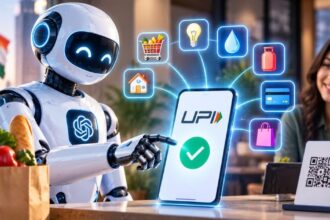


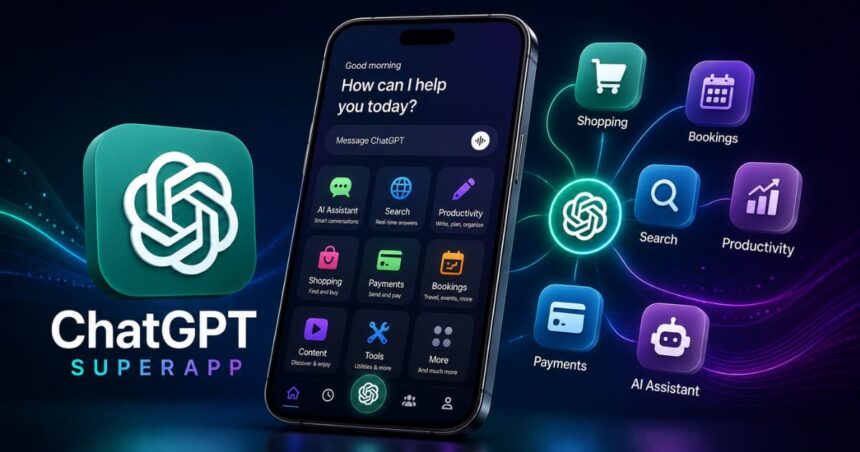
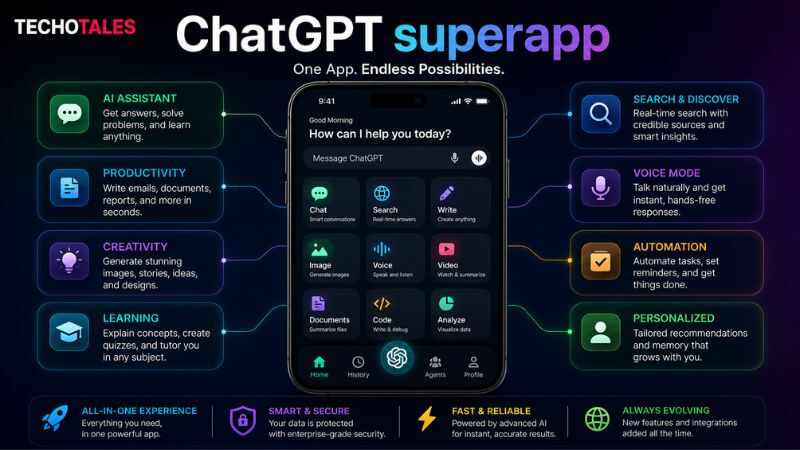
OpenAI may be preparing for the biggest transformation in ChatGPT’s history. According to recent reports, the company is working on a major overhaul that could turn ChatGPT from an AI chatbot into a full-fledged digital superapp. If the plans materialize, ChatGPT could evolve into a platform that combines productivity, shopping, communication, content discovery, bookings, payments, and AI-powered assistance under a single ecosystem.
The reported move comes at a crucial time for OpenAI. The company has emerged as one of the biggest names in artificial intelligence and continues to expand its commercial offerings across consumer and enterprise markets. With competition intensifying from Google, Meta, Microsoft, Anthropic, and several AI startups, OpenAI appears to be looking beyond chat-based interactions and toward becoming an everyday digital platform. Industry experts believe such a transformation could play a major role in strengthening OpenAI’s long-term business strategy and potentially pave the way for a future public listing.
OpenAI Wants ChatGPT To Become More Than A Chatbot
More Read

When ChatGPT launched, it quickly became one of the fastest-growing consumer applications in technology history. Millions of users adopted the platform for writing assistance, coding support, research, productivity tasks, learning, and content creation. However, the AI industry has evolved rapidly. Today’s users increasingly expect AI assistants to perform actions rather than simply answer questions. This shift appears to be influencing OpenAI’s next phase of development.
Reports suggest the company is exploring ways to transform ChatGPT into a broader digital ecosystem where users can complete multiple tasks without switching between different applications. Instead of opening separate apps for shopping, booking services, productivity work, or information gathering, users could potentially access everything through ChatGPT. The strategy mirrors the superapp model that has become highly successful across several Asian markets.
What Is A Superapp?
A superapp is essentially a platform that combines multiple digital services into a single application. Rather than relying on dozens of standalone apps, users can perform various activities within one ecosystem. Popular superapps often include:
- Messaging services
- Payments
- Shopping
- Travel bookings
- Food delivery
- Content discovery
- Productivity tools
- Financial services
OpenAI’s reported vision appears to involve creating a similar experience powered by artificial intelligence. In this model, AI becomes the central layer connecting every service. Instead of manually navigating different menus and applications, users could simply describe what they want and allow ChatGPT to handle the process.
AI Is Moving From Answers To Actions
One of the most important trends emerging in artificial intelligence is the shift toward action-oriented systems. Traditional chatbots focus on answering questions. Modern AI platforms are increasingly being designed to complete tasks. This is where OpenAI’s reported plans become particularly significant. Future versions of ChatGPT could potentially help users:
- Manage schedules
- Book appointments
- Make purchases
- Handle productivity workflows
- Discover content
- Coordinate travel plans
- Interact with third-party services
The goal is to reduce friction and make AI a central interface for everyday digital activities. Instead of acting as a search tool, ChatGPT could become an execution platform.
Competition In AI Is Heating Up
OpenAI’s reported expansion comes at a time when competition within the AI industry has reached unprecedented levels. Several technology giants are investing billions of dollars into AI development.
Google continues to expand Gemini across Search, Android, Workspace, and consumer products. Meta is aggressively integrating AI across Instagram, WhatsApp, Facebook, and its broader ecosystem. Microsoft is embedding AI into Windows, Office, and enterprise solutions.
Meanwhile, companies like Anthropic, Perplexity, and emerging startups are introducing new AI-powered products at a rapid pace. In such an environment, user retention becomes increasingly important. By transforming ChatGPT into a broader platform, OpenAI could encourage users to spend more time within its ecosystem while reducing reliance on competing services.
Building A Larger Revenue Engine
The reported superapp strategy is not just about user convenience. It could also unlock significant business opportunities. OpenAI already generates revenue through:
- ChatGPT Plus subscriptions
- Enterprise solutions
- API services
- Developer tools
- Team and business plans
However, a broader ecosystem could create additional monetization channels. Potential opportunities may include:
- Transaction-based services
- Commerce integrations
- Premium digital tools
- Partner ecosystems
- Subscription bundles
- Advertising opportunities
The larger the ecosystem becomes, the more opportunities OpenAI gains to diversify its revenue streams. For investors and analysts, this type of business model is often viewed as more sustainable than relying solely on subscription income.
Why IPO Speculation Is Growing
Although OpenAI has not officially announced plans for an initial public offering (IPO), reports continue to fuel speculation about its long-term ambitions. Technology companies preparing for public markets often focus on three major factors:
- Strong revenue growth
- Large user ecosystems
- Long-term monetization potential
Transforming ChatGPT into a superapp could strengthen all three areas. A broader platform creates more engagement, attracts new users, and opens additional business opportunities. These factors are typically attractive to investors evaluating growth-focused technology companies.
While an IPO remains speculative, industry observers believe ecosystem expansion would strengthen OpenAI’s position if it ever decides to pursue public market ambitions.
What It Could Mean For Users
For users, the benefits could be substantial. A successful superapp experience could eliminate the need to constantly switch between multiple applications. Instead of juggling different services, users might rely on ChatGPT as a single destination for communication, productivity, information, and transactions.
The AI assistant could become increasingly personalized, learning user preferences and helping automate routine activities. However, such a transformation also raises important questions.
Privacy remains a major concern whenever platforms collect more data and manage more services. Regulatory scrutiny could increase as OpenAI expands into new sectors. Competition authorities may also examine how large AI ecosystems interact with third-party platforms.
The balance between convenience and user control will likely remain a key discussion point as these technologies evolve.
The Future Of ChatGPT May Look Very Different
The reported plans suggest OpenAI sees ChatGPT as much more than an AI chatbot. The company appears to be positioning artificial intelligence as the central interface for digital life. Rather than simply responding to questions, future versions of ChatGPT could actively help users complete tasks, manage workflows, and access services through a unified platform. If successful, the transformation could redefine how people interact with technology on a daily basis.
Conclusion
OpenAI’s reported superapp ambitions represent one of the most significant developments in the evolution of ChatGPT. By expanding beyond conversations and moving into productivity, commerce, services, and digital experiences, the company is aiming to build a much larger ecosystem around its AI technology.
While many details remain unclear, the direction signals a broader shift occurring across the AI industry. The next generation of AI assistants will likely focus less on answering questions and more on helping users accomplish real-world tasks. If OpenAI successfully executes its vision, ChatGPT could evolve into one of the most influential digital platforms of the coming decade.
Follow Us: Facebook | X | Instagram | YouTube | Pinterest