


Google has introduced Gemini 4 Carbon, a new AI model designed to handle complex coding projects, identify software vulnerabilities and help security teams fix them. The model arrives just weeks after Gemini 4 Argon and signals Google’s growing focus on AI systems that can do more than answer questions or generate code.
According to Google DeepMind, Gemini 4 Carbon delivers significant improvements in cybersecurity, software engineering and long-running tasks. The company says it can identify weaknesses in software, assess whether vulnerabilities can be exploited and generate code patches to address them.
However, most users cannot access the model yet. Google is initially rolling it out to selected cybersecurity professionals and trusted partners while it continues testing the model’s safety measures.



What Is Google Gemini 4 Carbon?
Introducing Gemini 4 Carbon, our latest frontier model.
Carbon delivers improved performance across domains — ranking #1 on v5.0 of the @ArtificialAnlys Intelligence Index and sets a new state-of-the-art in cybersecurity and long-horizon capabilities.
It’s rolling out starting this week to cyber defenders through our Fairwind Program, with expanded access coming soon 🧵
— Google (@Google) October 28, 2026Gemini 4 Carbon is Google’s latest frontier AI model, built for demanding technical work that may require multiple steps and extended reasoning.
A typical chatbot responds to a question or follows a relatively short instruction. Carbon is designed to work through more complicated tasks, including investigating software bugs, analysing large codebases and developing fixes that address the underlying problem.
Google says its internal teams have tested the model on engineering projects that can run for days. These tasks include tracing difficult bugs across large software systems and working through multiple attempts when an initial solution fails.
This approach could be useful for software developers, cybersecurity teams and businesses maintaining complex applications. Instead of assisting with one small coding task at a time, the model aims to help teams complete larger pieces of technical work.
Google’s Cybersecurity Benchmarks Show Significant Gains
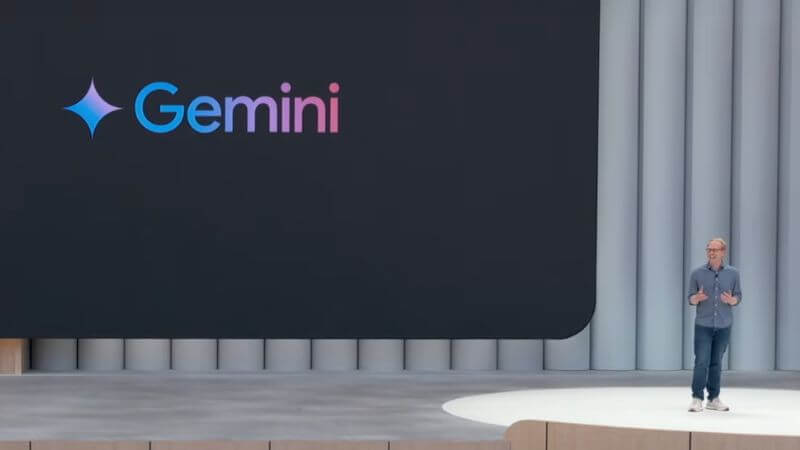
Cybersecurity is the main focus of Gemini 4 Carbon. Google says the model performs strongly across three stages of the security process: finding vulnerabilities, testing their severity and helping fix them.
The company reported the following results on external benchmarks:
| Benchmark | What It Tests | Google’s Reported Result |
|---|---|---|
| SEC-bench Pro | Finding vulnerabilities in real-world software | 88.2% |
| ExploitGym | Evaluating whether vulnerabilities can be exploited | 54.8% |
| CWE-bench | Developing fixes for known classes of software weaknesses | 71.0% |
These figures come from Google’s announcement and should be understood in the context of the specific tests used. They do not mean that Carbon can find every security flaw or reliably secure any application without human oversight.
Google also reported more than twice the success rate of Gemini 4 Argon in generating secure code on its internal benchmarks. The company said its Chrome team saw substantially better patch generation in its own testing, although those results are not a universal measure of performance across all software projects.
The distinction matters because detecting a vulnerability is only one part of cybersecurity. Security teams must also determine its severity, confirm that a proposed fix works and ensure that the change does not introduce new problems.
How Gemini 4 Carbon Could Help Developers
Software development involves much more than writing new code. Engineers spend considerable time reading existing systems, tracking bugs, testing changes and checking whether a fix creates unexpected side effects.
Gemini 4 Carbon is designed to help with these longer workflows. It could assist developers in tracing the cause of an error, suggesting a correction and working through the steps required to validate it.
For companies maintaining large applications, this could reduce the time spent on repetitive investigation and debugging. Security teams may also use the model to review code and prioritise vulnerabilities that need attention.
Google has reported improvements in coding and agentic tasks, including work that requires a model to plan and execute several steps. The practical benefit will depend on how well the model performs in real development environments and how much review its output requires.
It is important to remember that AI-generated code can still contain errors. Developers should test changes, review permissions and validate security fixes before deploying them to production systems.
Google Is Taking A Controlled Approach To Access
Google is not releasing Gemini 4 Carbon to everyone immediately. The company says the initial rollout will focus on a subset of cybersecurity defenders through its Fairwind programme, followed by additional trusted partners. The company is also participating in a US government process for pre-release model testing. This reflects the dual-use nature of advanced cybersecurity AI: the same capabilities that help defenders identify and fix vulnerabilities could also be misused by attackers.
Google says Carbon builds on the safety and security measures used with Gemini 4 Argon. These include model training, real-time misuse defences, prompt-injection resistance and monitoring intended to improve reliable behaviour.
The company has also reported improvements in resisting indirect prompt-injection attacks and reducing unsupported claims. These are encouraging results, but they are not proof that the model is immune to every attack or failure. A controlled rollout allows Google to gather feedback from security professionals and improve safeguards before expanding access.
Gemini 4 Carbon Pricing And Availability
Google has announced introductory API pricing that matches Gemini 4 Argon’s initial rates. These prices apply to developers using the API, not necessarily to a consumer subscription.
| Detail | Information |
|---|---|
| Model | Gemini 4 Carbon |
| Developer | Google DeepMind |
| Main focus | Cybersecurity, coding and complex technical tasks |
| Initial access | Selected cybersecurity defenders through Fairwind |
| Input token price | $2 per million tokens during the introductory period |
| Output token price | $10 per million tokens during the introductory period |
| Planned wider access | Developers, businesses and consumers |
| General availability | Not yet announced |
Google says the introductory pricing will eventually increase to $4 per million input tokens and $20 per million output tokens. Cached input tokens receive a 95% discount against the input-token price, according to the company’s announcement.
For now, developers and ordinary Gemini users should not assume Carbon is available through the standard Gemini app. Google has said it plans to expand access, but it has not provided a definitive date for general availability.
What Gemini 4 Carbon Means For The AI Industry
The launch shows how competition among AI companies is moving beyond chatbot quality and coding demonstrations. Google, OpenAI and Anthropic are competing to build models that can complete longer tasks, work with software systems and support specialised professional workflows.
Cybersecurity is particularly important because organisations face a growing volume of software vulnerabilities and increasingly complex digital infrastructure. AI tools could help security teams review more code and respond faster, provided their findings are accurate and their use is properly controlled.
For Indian businesses, the potential applications include reviewing enterprise software, strengthening application security and helping development teams investigate bugs. However, companies will need to consider data privacy, access controls, deployment costs and human oversight before integrating such systems into sensitive workflows.
Conclusion
Google Gemini 4 Carbon is a significant step in the company’s effort to build AI systems for advanced coding and cybersecurity. Its reported benchmark results suggest that it could help security teams find vulnerabilities and develop fixes more efficiently.
The immediate limitation is access: Carbon is still being rolled out to selected defenders and trusted partners. Its broader value will become clearer when independent evaluations and real-world deployments show how consistently it performs outside Google’s own tests.
Follow Us: Facebook | X | Instagram | YouTube | Pinterest