



In one of India’s most romantic start-up collapses, Reliance Industries has completely written off its ₹1645 crore investment in Dunzo. What makes the story particularly stunning is how a company valued at $775 million and backed by tech giant Google could vanish from the market in early 2025.
- Mistakes That Killed Dunzo
- The Quick Commerce Gamble That Backfired Spectacularly
- The Mathematics Of Disaster
- Leadership Crisis And Funding Nightmare
- The Executive Exodus
- Complete Operational Breakdown And Failed Rescue Attempts
- The Failed Rescue Mission
- The Final Financial Reality
- The Larger Implications For The Indian Start-up Ecosystem
- Lessons For The Quick Commerce Industry
- The Importance Of Disciplined Growth
Mistakes That Killed Dunzo
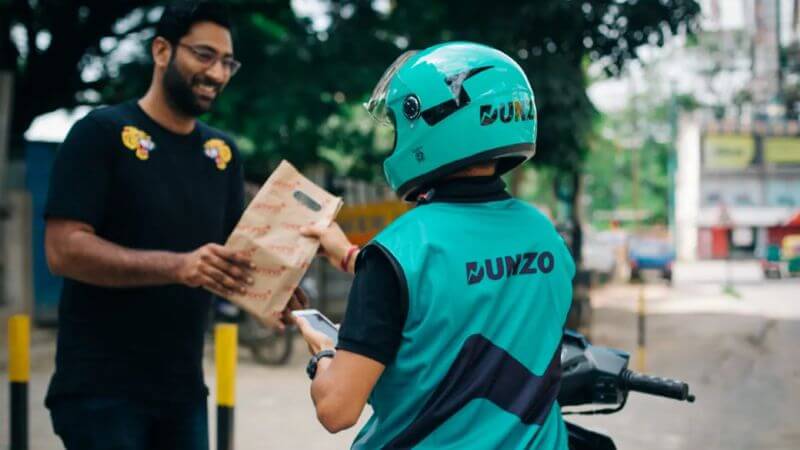
Well, this is not just the start of a failure story; it’s a masterclass in how even the most promising venture can crumble under the weight of poor execution, leadership, and chaos.
The Quick Commerce Gamble That Backfired Spectacularly
Dunzo’s transformation from a simple hyperlocal delivery app to a 20-minute grocery delivery service from 2021 to 2022 began with its biggest mistake. This strategic shift wasn’t just a business model change; it was a complete overhaul that demanded massive capital investment.
The company had to build an entirely new infrastructure from scratch. Dark stores needed to be set up across multiple cities, inventory had to be maintained at optimum levels, and a complex system for rapid delivery was needed. The logistics network required constant funding. These weren’t one-time costs but ongoing expenses that kept growing with every new location.
The Mathematics Of Disaster
More Read

The numbers tell a brutal story. At its peak, Dunzo reportedly lost over ₹230 per order. Think about it — every single delivery was actually costing the company more than ₹200 beyond what the customer paid. This unsustainable unit economic model meant that the more orders they fulfilled, the faster they burned through their cash reserves.
The situation became even worse in FY23 when the company recorded a staggering net loss of ₹1800 crore. This massive loss wasn’t just due to delivery costs, but also ballooning advertising spends, operational inefficiencies, and mounting employee costs. Despite all this spending, revenue growth remained modest and couldn’t even come close to matching the expenditure trajectory.
Leadership Crisis And Funding Nightmare
Reliance Retail Venture’s acquisition of a 25.8% stake in early 2022 seemed like a blessing initially. The plan was to strategically integrate Dunzo’s logistics capabilities with JioMart to create a powerful quick commerce ecosystem. Along with the investment came significant control rights, which initially brought stability and much-needed funding.
However, this arrangement soon became a double-edged sword. Industry insiders reveal that Reliance’s significant control limited Dunzo’s ability to raise capital from other potential investors. When you are partially controlled by one of India’s largest conglomerates, other investors often hesitate to come in, fearing limited influence over company decisions.
The Executive Exodus
By late 2023, Dunzo faced a severe liquidity crunch, and that’s when the leadership started falling apart like dominoes. The company witnessed the exit of multiple co-founders, including Mukund Jha, Dalvir Suri, and Ankur Agarwal. The final blow came in January 2025, when CEO Kabir Biswas also departed.
This leadership crisis created a vicious circle as top executives left, and employee morale plummeted sharply. Reports of unpaid salaries and mass layoffs further deteriorated the company’s reputation, making it even harder to sustain in the market.
Complete Operational Breakdown And Failed Rescue Attempts
By late 2024, Dunzo’s situation had moved from concerning to catastrophic. Creditors were approaching the National Company Law Tribunal over unpaid dues, signaling that the company couldn’t even meet its basic financial obligations. The most visible sign of trouble was that the Dunzo app and website were intermittently offline — a death sentence for any digital platform.
The Failed Rescue Mission
Desperate times called for desperate measures, and strategic sale talks were initiated with several potential acquirers. Major players like Swiggy, Tata’s BigBasket, and other potential buyers were approached, but none of these rescue talks materialized into actual deals.
Without a rescue plan, the inevitable happened. The service halted in January 2025, completely erasing consumer trust and brand confidence. Customers who had grown accustomed to quick deliveries were left stranded, while vendors who had built their operations around the Dunzo platform faced significant losses.
The Final Financial Reality
With valuation estimates dropping dramatically to around ₹300 crore from the peak of $775 million, Reliance faced a stark choice. They could either continue funding a sinking ship or cut their losses completely. Given the lack of any viable turnaround plan and the company’s deteriorating performance, it chose to put no more money into what seemed to be a bottomless pit.
The Larger Implications For The Indian Start-up Ecosystem

Reliance Dunzo’s loss is not an isolated incident, but a part of a troubling trend in India’s tech sector. This write-off joins the ranks of some of India’s largest tech failures alongside Prosus’ $500 million loss in Byju’s and Info Edge’s ₹276 crore write-off on 4B Networks.
Lessons For The Quick Commerce Industry
The Dunzo episode serves as a crucial wake-up call for the quick commerce sector. It highlights the extreme risk associated with a capital-intensive model that prioritizes growth over profitability. The industry now faces increased scrutiny over unit economics and sustainable business practices.
The Importance Of Disciplined Growth
Moving forward, this case reinforces the critical importance of disciplined unit economics in the sector’s next growth phase. Companies can no longer rely solely on raising massive funding rounds to sustain unsustainable business models. Investors are becoming more cautious, and start-ups must demonstrate clear paths to profitability rather than just promising rapid expansion.
The Dunzo story serves as a shock that, in the start-up world, even the most promising ventures with backing from tech giants and major conglomerates can fail if fundamental business principles are ignored.
Follow Us: Facebook | X | Instagram | YouTube | Pinterest